San Francisco Entrepreneurs Face 3 Critical Market Shifts Right Now
Rising commercial rents, shifting consumer behavior, and regulatory uncertainty are reshaping the landscape for independent business owners across the Bay.
Rising commercial rents, shifting consumer behavior, and regulatory uncertainty are reshaping the landscape for independent business owners across the Bay.
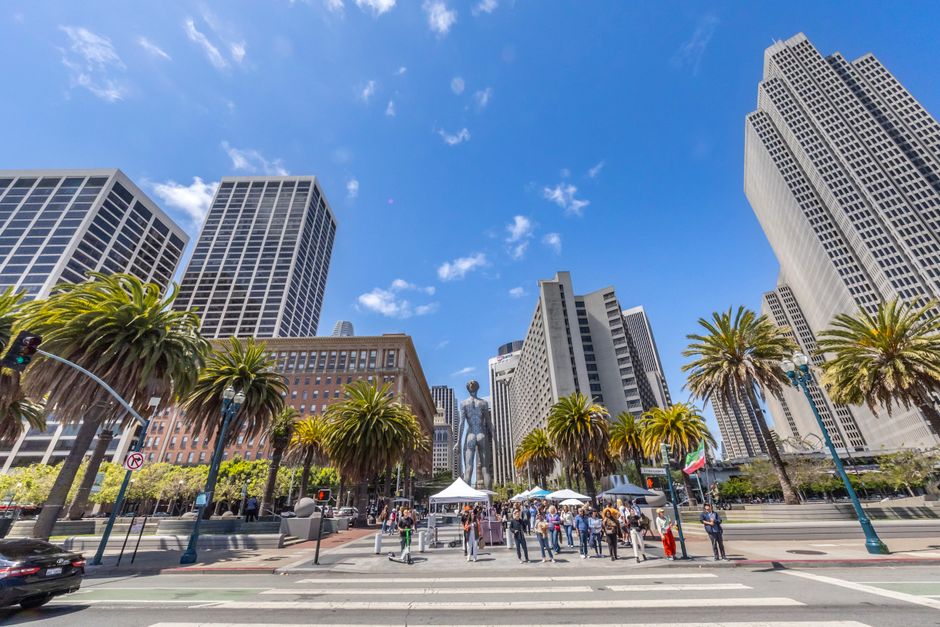
Walking down Valencia Street or through the Ferry Building Marketplace these days reveals a city at an inflection point. San Francisco's small business community faces a constellation of market pressures that demand immediate strategic attention, from landlords seeking aggressive rate increases to consumers whose spending patterns have fundamentally shifted since 2024.
The most visible challenge remains commercial real estate. Average asking rents for ground-floor retail in Mission District and Hayes Valley have climbed to $85-$120 per square foot annually—a 12-15% increase since early 2025. For a modest 1,200-square-foot café or boutique, that translates to monthly obligations pushing $10,000 to $12,000 before utilities and staffing. Savvy entrepreneurs are responding by clustering in emerging micro-neighborhoods like Dogpatch and the Bayview, where foot traffic remains strong but rents lag downtown core areas by roughly 20-25%.
Consumer behavior represents the second critical shift. San Francisco shoppers increasingly demand authentic, community-rooted experiences—precisely the opposite of the homogenized retail landscape that dominated the 2010s and early 2020s. Pop-up events, maker markets at nonprofits like SFMADE, and experiential retail models are outperforming traditional fixed storefronts. Data from local business associations suggests foot traffic on commercial corridors like Fillmore Street and Polk Gulch has stabilized after years of decline, but only for businesses offering something distinct.
Regulatory complexity adds a third layer. San Francisco's small business ecosystem now navigates evolving labor standards, particularly regarding scheduling requirements and benefits eligibility for part-time workers. Simultaneously, national political uncertainty—reflected in fluctuating tariff discussions and immigration policy shifts—has created hesitation among business owners planning inventory and hiring for the fall season. Many entrepreneurs report delaying expansion decisions until late summer when policy direction becomes clearer.
The path forward requires agility. Successful small business owners are leveraging digital tools to reduce overhead costs, building deeper supplier relationships to manage supply chain volatility, and investing in staff retention through competitive wages and genuine workplace culture—recognizing that San Francisco's labor market remains tight despite broader economic uncertainty.
For entrepreneurs considering San Francisco, the message is clear: opportunity exists, but success demands strategic site selection, authentic differentiation, and disciplined financial management. The city's small business community has weathered worse, but this moment requires clear-eyed assessment of fundamentals.
This article was compiled by AI and screened before publishing. See our editorial standards.
How does this story make you feel?
Spread the word
About this article
Published by The Daily San Francisco
Daily brief
Free, in your inbox before 7am. Weekdays.
More in Business