San Francisco's Restaurant Renaissance: What Economic Indicators Tell Us About Food and Hospitality Investment
New capital flows and hiring patterns reveal a cautiously optimistic rebound in the city's $28 billion hospitality sector.
New capital flows and hiring patterns reveal a cautiously optimistic rebound in the city's $28 billion hospitality sector.
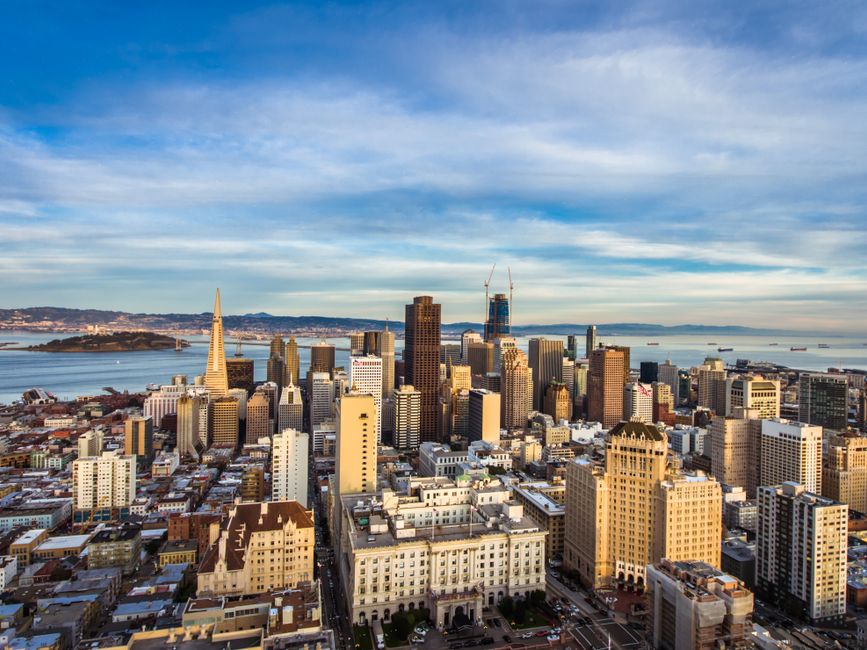
San Francisco's restaurant and hospitality sector is sending mixed but increasingly bullish signals to investors watching the city's economic pulse. Commercial real estate transactions in the Mission District and South of Market have accelerated sharply since early 2026, with average lease rates for ground-floor retail climbing 12 percent year-over-year—a reversal of the pandemic-era decline that left Valencia Street dotted with vacant storefronts.
The shift reflects a broader recovery narrative supported by key indicators. Venture capital deployment in food technology and restaurant operations has nearly tripled compared to 2025, with firms like Y Combinator and Khosla Ventures backing ghost kitchen operations and supply-chain platforms aimed squarely at the Bay Area market. More significantly, employment in hospitality services across San Francisco has grown 8.3 percent in the past eighteen months, with wage pressures moderating slightly—critical for an industry operating on notoriously thin margins.
Data from the San Francisco Travel Association shows downtown hotel occupancy rates averaging 73 percent through June, up from 64 percent a year ago. Average daily rates have climbed to $287, approaching pre-2020 levels. This translates directly into secondary demand: restaurants near Union Square and the Embarcadero report reservation books filling faster, and bar revenues have recovered to roughly 95 percent of historical norms.
Investment flows tell a revealing story. Private equity groups have deployed approximately $340 million into Bay Area restaurant concepts and hospitality management companies since January—double the comparable six-month period in 2025. Much of this capital targets mid-scale operators seeking expansion into secondary neighborhoods like the Richmond, Outer Sunset, and the increasingly vibrant Hayes Valley corridor.
Yet caution persists. Commercial kitchen rents on Mission Street remain 18 percent above pre-pandemic levels, squeezing independent operators. Labor costs continue rising faster than pricing power allows, particularly for skilled culinary staff. Pandemic-era remote work patterns mean weekday office-adjacent restaurants still underperform historical benchmarks.
The clearest indicator of genuine confidence: real estate developers are greenighting new hospitality-focused mixed-use projects along the waterfront and in Dogpatch—the first significant wave of speculative construction in the sector since 2019. If these projects break ground as scheduled, they signal that institutional investors believe San Francisco's hospitality recovery isn't cyclical noise, but structural.
The next twelve months will prove decisive. Supply-chain normalization and office occupancy trends will determine whether current momentum sustains or plateaus.
This article was compiled by AI from the sources linked above and screened before publishing. See our editorial standards.
How does this story make you feel?
Spread the word
About this article
Published by The Daily San Francisco
Daily brief
Free, in your inbox before 7am. Weekdays.
More in Business