Bay Area Business Leaders Face Crucial Market Reset: Here's What's Shifting in 2026
As interest rates stabilize and venture capital patterns evolve, San Francisco companies must adapt to a fundamentally different investment landscape.
As interest rates stabilize and venture capital patterns evolve, San Francisco companies must adapt to a fundamentally different investment landscape.
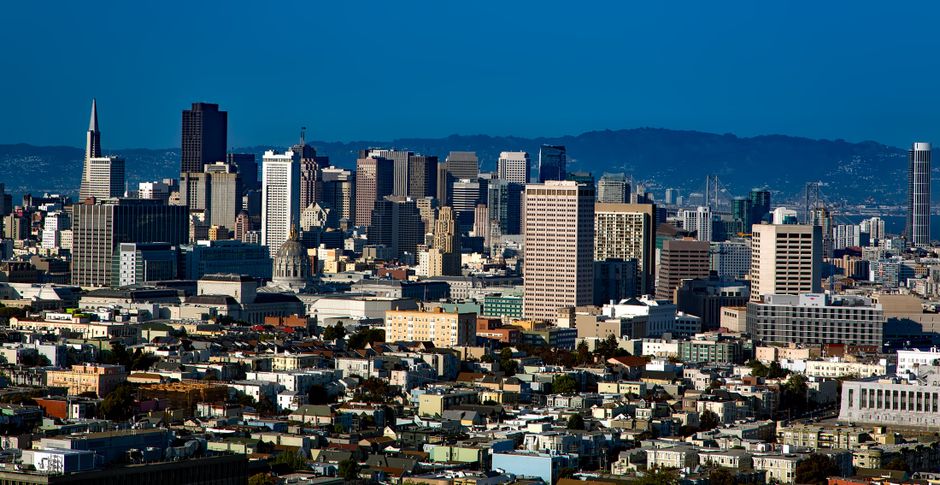
The San Francisco business community is navigating a pivotal moment. After years of volatile market conditions, 2026 is presenting both opportunity and constraint for companies operating along the Peninsula and in the city's core financial districts around the Embarcadero and Montgomery Street.
Real estate costs remain the elephant in every boardroom. Office space in SOMA and the Financial District is trading at $60-75 per square foot annually—down from pandemic-era peaks but still historically elevated. For startups, this reality has accelerated the shift toward distributed workforces and smaller footprints in neighborhoods like the Mission and Hayes Valley, where adaptive commercial leases now dominate. Tech companies are making decisions today about whether to maintain expensive headquarters or embrace the hybrid model permanently.
Venture capital deployment has fundamentally shifted. Sources tracking San Francisco Bay Area investment show that funding rounds are increasingly focused on profitability rather than growth-at-all-costs. Early-stage funding remains available, but Series A and B companies face tougher due diligence around unit economics and path to revenue. This affects everything from hiring decisions to product roadmaps across the region's most ambitious startups.
Consumer spending patterns are reshaping retail and hospitality strategies. While neighborhoods like Union Square and the Ferry Building remain tourist anchors, foot traffic patterns have changed. Businesses report that commuter-dependent retail—once a staple along Market Street and near BART stations—requires new customer acquisition strategies. Meanwhile, residential neighborhoods are seeing stronger retail performance as remote work normalizes.
Commercial landlords are adjusting expectations. Prime office buildings in the Financial District and around Market Street are offering longer tenant improvement allowances and lease flexibility to fill vacancies. For growing companies, this creates negotiating leverage that didn't exist five years ago.
The cost-of-living crisis continues to pressure wage structures. San Francisco's median rent for a one-bedroom apartment hovers around $2,400, forcing companies to reconsider compensation packages. Some firms are offering remote-work flexibility as a non-cash benefit, while others are reducing office requirements to justify lower base salaries—a controversial trade-off gaining traction across the Bay.
Businesses should monitor three indicators closely: interest rate trajectory from the Federal Reserve, which affects both borrowing costs and investor appetite; tech sector earnings reports, which signal broader economic health; and commercial real estate absorption rates, which reveal how many companies are expanding versus contracting.
The moment demands strategic clarity. Companies that invested heavily in San Francisco real estate or maintained bloated cost structures during the easy-money years are feeling pressure. Those that stayed lean and focused on genuine market demand are positioned to capitalize on what comes next.
This article was compiled by AI from the sources linked above and screened before publishing. See our editorial standards.
How does this story make you feel?
Spread the word
About this article
Published by The Daily San Francisco
Daily brief
Free, in your inbox before 7am. Weekdays.
More in Business