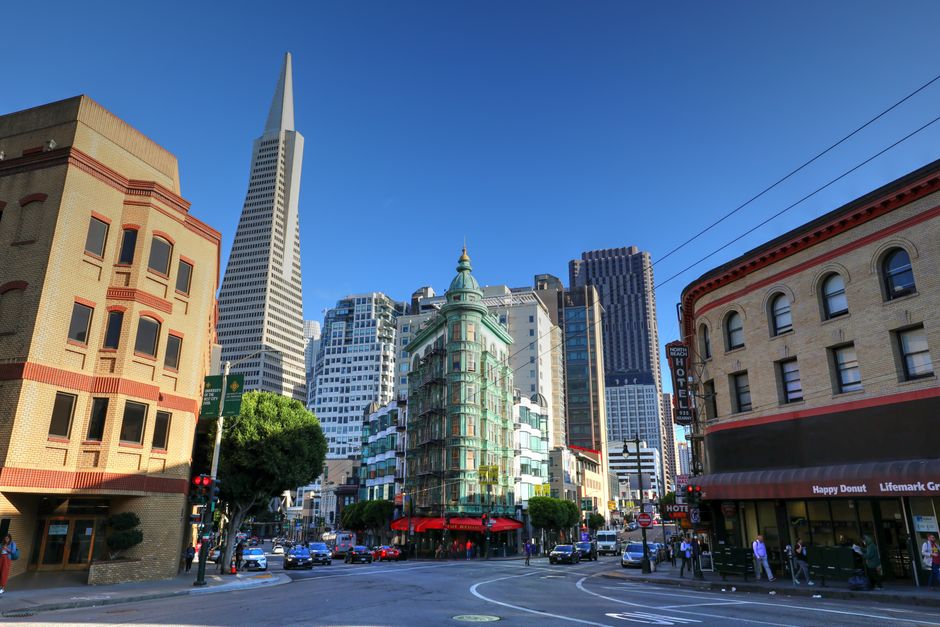
San Francisco's retail and hospitality sectors are sending mixed signals as mid-2026 unfolds. While venture capital deployment in food-tech and restaurant concepts has surged 34 percent compared to last year, commercial rent growth in prime dining corridors like the Mission District and North Beach continues to outpace operator margins, creating a widening gap between investor enthusiasm and ground-level profitability.
Recent data from the San Francisco Travel Association shows that hotel occupancy rates have climbed to 78 percent—a healthy marker that typically precedes broader dining expansion. Yet average check sizes at independent restaurants across the Financial District have stalled, hovering around $62 per person, while labor costs have climbed another 8 percent year-over-year. This tension explains why institutional capital is increasingly targeting aggregator models and cloud kitchen operators rather than traditional brick-and-mortar establishments.
The numbers become clearer when examining specific neighborhoods. In SOMA, where several heritage restaurants closed last quarter, new investment is clustering around meal-delivery technology and ghost kitchen networks rather than physical storefronts. Conversely, Hayes Valley has attracted three significant rounds of funding for neighborhood-focused concepts, suggesting investors believe younger demographics and walkability metrics trump overall downtown rent equations.
Commercial real estate brokers report that ground-floor retail on Valencia Street now commands $12 to $18 per square foot monthly—a 22 percent increase since 2024. For a modest 2,000-square-foot venue, that translates to annual occupancy costs between $288,000 and $432,000 before staff, inventory, or utilities. Most independent operators cannot sustain this burden without achieving 35 percent food costs and 25 percent labor percentages simultaneously—a ceiling that remains difficult in San Francisco's wage environment.
Investment firms are adapting. Several have shifted focus toward minority-owned hospitality ventures and chef-led concepts in emerging neighborhoods like the Bayview and Excelsior, where rent remains below $8 per square foot. This reallocation reflects not just social responsibility mandates but a recognition that traditional high-rent zones now require either significant venture backing or established brand equity.
The broader picture suggests San Francisco's hospitality recovery will be geographically fragmented. Downtown and established tourist zones will consolidate around well-capitalized operators and established names. Meanwhile, neighborhood-level growth will concentrate in cost-advantaged areas where emerging entrepreneurs can still access capital and sustain operations. Commercial landlords counting on uniform market appreciation may face disappointment as tenant composition shifts decisively toward technology-enabled, lower-overhead models.
This article was compiled by AI from the sources linked above and screened before publishing. See our editorial standards.