Silicon Valley's Retreat Opens Door for Bold Operators in San Francisco's Office Market
As tech companies shrink footprints, savvy investors and flexible-workspace firms are snapping up prime real estate at discounts unseen in a decade.
As tech companies shrink footprints, savvy investors and flexible-workspace firms are snapping up prime real estate at discounts unseen in a decade.
San Francisco's commercial property market is experiencing a peculiar moment: distress for some has become opportunity for others. After years of tech giants hoarding office space across South of Market and the Financial District, a quieter but significant shift is underway—and early movers are already capitalizing on it.
The numbers tell the story. Office vacancy rates in SOMA have climbed to 18 percent, the highest since 2017, while asking rents on certain corridors have fallen nearly 20 percent year-over-year. Yet rather than panic, a cohort of landlords, flexible-workspace operators, and mixed-use developers are betting that this represents a clearing of the market, not its collapse.
"What we're seeing is consolidation," explains the perspective held by market analysts tracking downtown corridors. Companies are abandoning sprawling, underutilized campuses. Class B and C office buildings along Mission Street and down toward the Embarcadero are being repositioned—some carved into smaller suites for emerging firms, others converted toward life sciences, creative studios, or residential-office hybrids.
Operators like Industrious and Convene have aggressively expanded membership models into newly available space. A 15,000-square-foot floor on Market Street that commanded $80 per square foot three years ago now leases for $55 to flexible operators who sub-divide and derisk landlord exposure. That arbitrage—offering shorter terms, all-inclusive amenities, and community programming—appeals to post-pandemic companies skeptical of long-term commitments.
Real estate investment trusts focused on secondary markets are quietly accumulating positions. Buildings on Van Ness Avenue and in the Hayes Valley corridor—historically overlooked compared to premium SOMA addresses—are attracting interest from operators seeking to develop mixed-use projects. One recent conversion of a former office building on Folsom Street into 80 residential units with ground-floor commercial space sold at a 30 percent discount to 2022 comparable transactions.
Life sciences companies represent another emerging winner. As biotechnology and health tech firms seek lab-ready environments, property owners are retrofitting vacant tech offices. The Dogpatch and Potrero Hill corridors, buffered by proximity to UCSF and transportation hubs, are seeing renewed investor interest.
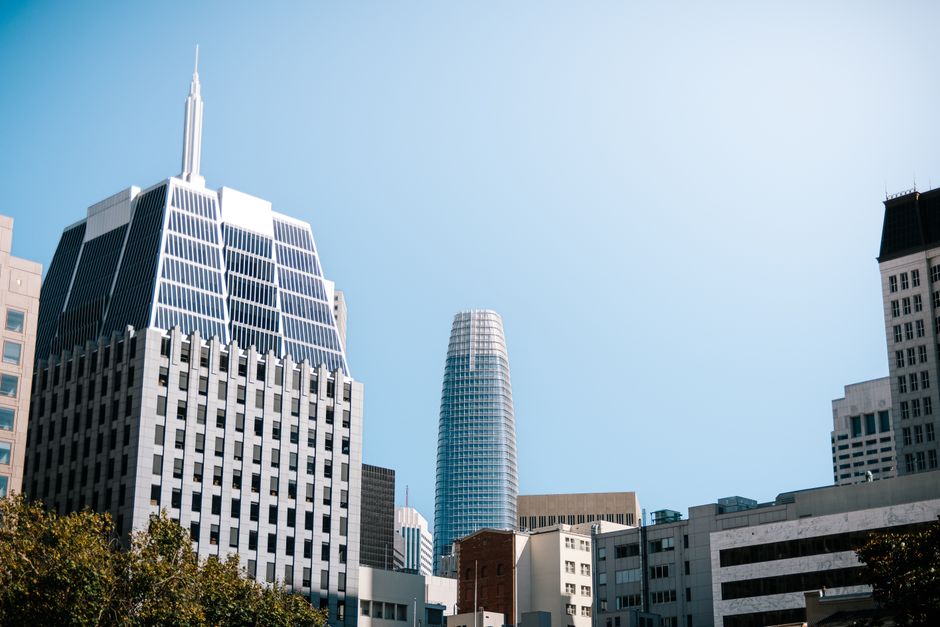
Landlords holding premium space in trophy buildings—the Salesforce Tower, 140 New Montgomery—maintain pricing power. But the second tier is where the action is. Those betting on San Francisco's long-term appeal and willing to accept lower immediate returns are positioning themselves for the next cycle. The city's office market isn't recovering to 2021 peaks; it's reorganizing around what actually works.
This article was compiled by AI from the sources linked above and screened before publishing. See our editorial standards.
How does this story make you feel?
Spread the word
About this article
Published by The Daily San Francisco
Daily brief
Free, in your inbox before 7am. Weekdays.
More in Business