The Best Wind-Down Routines Backed by Sleep Science
Researchers say the hour before bed matters more than the eight hours after it — and San Francisco's wellness community is finally catching up.
Researchers say the hour before bed matters more than the eight hours after it — and San Francisco's wellness community is finally catching up.
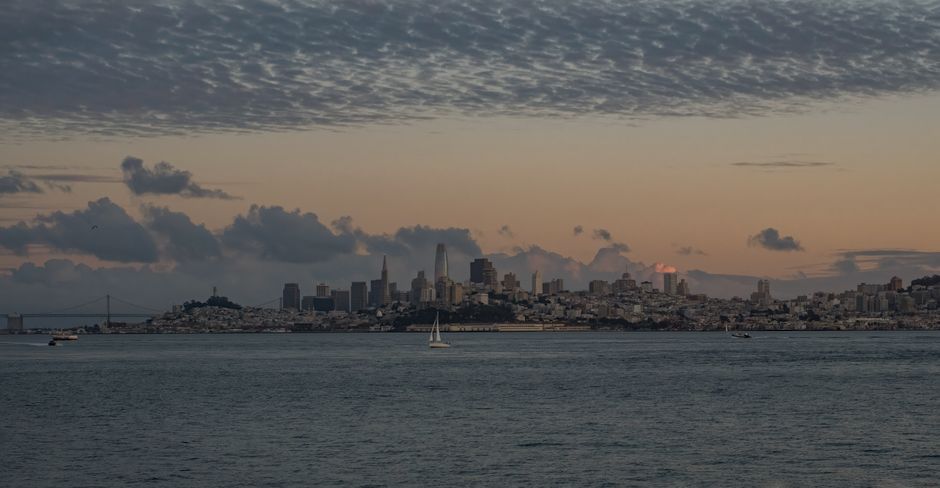
Sleep-deprived San Franciscans are losing roughly 6.1 hours of productive time every week, according to a 2025 RAND Corporation analysis that put the Bay Area among the top five most sleep-deficient metro regions in the United States. The number tracks. Ask anyone dragging themselves up the Marin Headlands trails on a Saturday morning why they feel wrecked, and the answer is rarely the hike itself.
The science is getting harder to ignore. UCSF's Weill Institute for Neurosciences has published a string of studies over the past three years linking irregular pre-sleep behavior — scrolling, late meals, inconsistent bedtimes — to measurably shorter REM cycles and elevated cortisol the following morning. The core finding keeps landing the same way: most people spend enormous energy optimizing the sleep itself and almost none optimizing the 60 minutes that precede it.
The mechanism is straightforward. Melatonin — the hormone that signals to your brain that darkness is coming — begins rising roughly two hours before your natural sleep time, but only if your environment cooperates. Blue-spectrum light from phones and laptops suppresses that rise. So does eating a large meal late, because your core body temperature needs to drop about 1 to 1.5 degrees Fahrenheit for sleep onset to happen efficiently, and digestion works against that drop.
Cognitive arousal is the other killer. Checking email at 10 p.m., even briefly, triggers the prefrontal cortex in ways that take 45 minutes or more to quiet. Sleep researchers call this "cognitive hyperarousal," and it is far more common in high-pressure professional environments — which describes roughly a third of San Francisco's workforce, concentrated in neighborhoods like SoMa, Mission Bay, and the Financial District.
The practical protocol that consistently shows up in peer-reviewed literature involves three components. First, a fixed "digital sunset" — all screens off no later than 90 minutes before bed. Second, a temperature drop, either through a cool shower around 9:30 p.m. or by lowering the thermostat to between 65 and 68 degrees Fahrenheit. Third, some form of low-stimulation physical or sensory activity: stretching, slow walking, reading physical print, or a structured breathing exercise like the 4-7-8 method developed by Dr. Andrew Weil at the University of Arizona's Andrew Weil Center for Integrative Medicine.
A handful of local programs have built real followings around these principles. The Integral Yoga Institute on Dolores Street in the Mission runs a Thursday evening restorative yoga class specifically designed as a sleep-preparation session, ending at 8:45 p.m. — early enough to give participants that 90-minute runway before a reasonable bedtime. Spots run $22 and fill up most weeks by Tuesday.
At Golden Gate Park, the free Sunday morning Tai Chi sessions near the de Young Museum have a quieter cousin: a Wednesday evening "slow movement" group that meets at the Panhandle entrance on Fell Street around 7 p.m. Regulars say the practice has become a non-negotiable anchor for their wind-down schedule.
For those who prefer structure with some clinical backing, UCSF Health's Osher Center for Integrative Health on Irving Street in the Inner Sunset offers a six-week Cognitive Behavioral Therapy for Insomnia program — CBT-I — which sleep specialists broadly consider the most evidence-based non-pharmaceutical intervention available. The program costs $340 for the full course and has a waitlist that currently runs about six weeks out.
The bottom line for most people isn't complicated or expensive. Pick a consistent lights-out time and work backward 90 minutes. Put the phone in another room. Take a shower. The Bay Trail along the Embarcadero makes for a decent 20-minute evening stroll that checks the light-exposure and temperature boxes simultaneously — and it's free. Sleep science has been pointing at the same window for years. The question is whether you protect it.
How does this story make you feel?
Spread the word
About this article
Published by The Daily San Francisco
Daily brief
Free, in your inbox before 7am. Weekdays.
More in Wellness