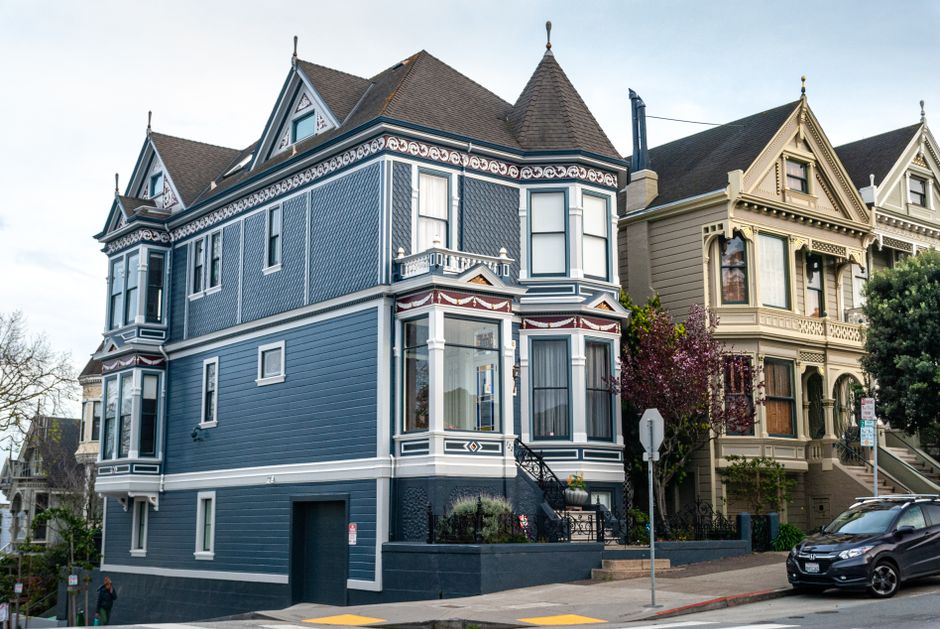
San Francisco's residential auction clearance rate hit 68 percent in June 2026, the highest monthly reading since the Federal Reserve began its rate-cutting cycle in late 2024, according to figures tracked by the San Francisco Association of Realtors. That number — the share of properties that sell at or above reserve on auction day — is now the sharpest real-time gauge the city has of whether buyers mean business.
The timing matters. Mortgage rates have eased to around 6.1 percent on a 30-year fixed, down from the 7.4 percent ceiling that chilled the market through most of 2023 and 2024. Tech hiring at firms concentrated along the Market Street corridor and in SoMa has resumed with enough momentum to push household formation back up among higher earners. Buyers who spent 18 months on the sidelines are colliding with a listing inventory that, in many neighborhoods, remains historically thin.
Where the Bidding Wars Are Happening
The pressure is most visible in Pacific Heights and Noe Valley. A detached single-family home on Sanchez Street drew seven registered bidders at a late-June auction run through Compass's dedicated auction platform, selling at $2.61 million — 9 percent above the $2.39 million reserve. A four-bedroom Victorian on Broadway Street in Pacific Heights cleared at $3.85 million against a $3.5 million floor, with three bidders still active in the final round. Both sales closed inside 30 days of listing.
The Mission District and Dogpatch tell a slightly different story, though not a discouraging one. Clearance rates in those neighborhoods are running closer to 58 percent — below the city average but up sharply from the 41 percent recorded in the first quarter of 2025. Condo units near the Illinois Street corridor in Dogpatch are drawing two to three bidders on average, compared with the single-bidder or no-bidder scenarios that dominated a year ago. The San Francisco Planning Department's approval last October of additional mixed-use density along Third Street has added to buyer confidence in the area's long-term trajectory.
What the Numbers Actually Mean
A clearance rate below 50 percent signals a buyer's market — motivated sellers, room to negotiate, extended days on market. Above 60 percent, the dynamic flips. Agents representing sellers start pricing more aggressively; buyers who lose multiple auctions grow desperate enough to waive contingencies. At 68 percent, San Francisco is firmly in seller territory for the first time since the spring of 2022, when the median single-family price briefly touched $1.7 million before rate hikes punctured the run.
The current city-wide median sits at $1.3 million across all residential categories, but that figure masks significant spread. Single-family homes in the 94114 ZIP code — covering Noe Valley and parts of the Castro — are trading at a median closer to $1.8 million. Condos in SoMa, where the office-conversion pipeline has added rental supply and dampened ownership demand, remain softer, with medians around $950,000 and clearance rates that lag the broader market by roughly 12 percentage points.
The San Francisco Rent Board's quarterly report, released in May, flagged that landlord petitions for capital improvement passthroughs are up 22 percent year-over-year — a leading indicator that investor buyers are returning to the multi-unit segment, betting on rising rents to justify acquisition costs.
For buyers heading into the second half of 2026, the practical read is straightforward: properties priced correctly in Pacific Heights, Noe Valley, and the better blocks of the Mission are not waiting. Showing up to an open house on a Saturday morning at a Fillmore Street listing without pre-approval and a clear sense of maximum bid is, right now, a losing strategy. Agents at firms including Sotheby's International Realty's San Francisco office and Coldwell Banker's Van Ness Avenue branch have been advising clients since May to get financing locked before they fall in love with a property. Given June's clearance numbers, that advice looks prescient.