Rent or Buy? San Francisco's Math Looks Different When You Stack It Against Other Major Cities
A fresh affordability comparison shows Bay Area renters and buyers face a calculus unlike almost anywhere else in the country — and the gap is growing.
A fresh affordability comparison shows Bay Area renters and buyers face a calculus unlike almost anywhere else in the country — and the gap is growing.
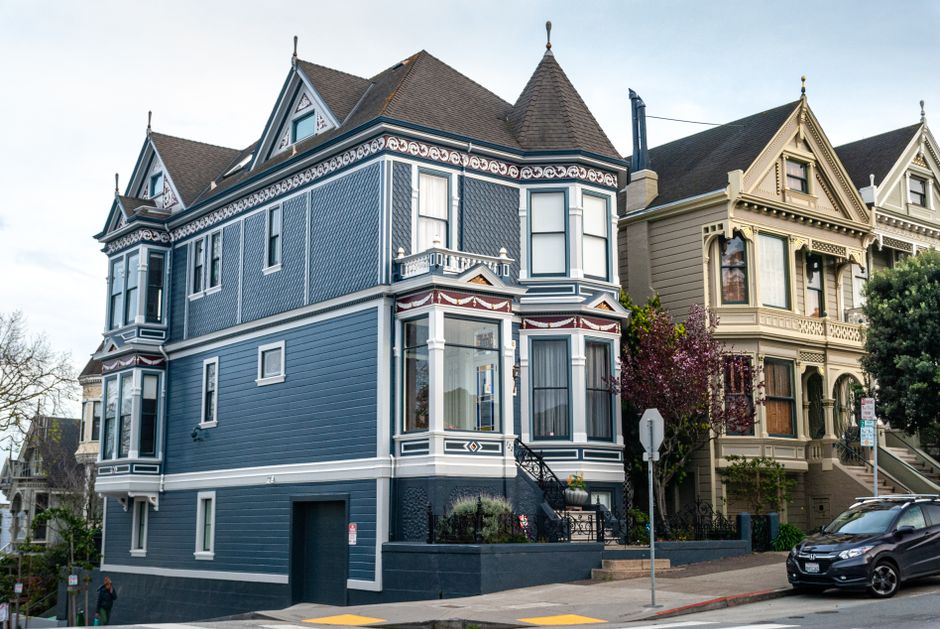
Renting a two-bedroom apartment in San Francisco now costs a median $3,450 a month, according to Zillow's June 2026 figures — more than double the national median of $1,620 and nearly 40 percent above what the same unit type fetches in Washington D.C., the closest comparable capital-style metro on the East Coast. That single data point frames the central problem for anyone trying to decide between signing a lease or taking out a mortgage in the Bay Area this Fourth of July weekend.
The timing matters. Mortgage rates have hovered between 6.7 and 6.9 percent for most of 2026, and San Francisco's median home price sits at $1.3 million. That translates to a monthly principal-and-interest payment of roughly $7,200 on a conventional 30-year loan with 20 percent down — or just over $260,000 upfront before closing costs. In practical terms, buyers need to stay put for at least seven years before the purchase-versus-rent math tilts meaningfully in their favor, according to modeling by the Terner Center for Housing Innovation at UC Berkeley, which published updated break-even estimates in March.
Stack San Francisco against Washington D.C. — itself no bargain — and the divergence is striking. D.C.'s median sale price reached $640,000 in May 2026, less than half of San Francisco's figure, while its average two-bedroom rent of $2,480 leaves would-be buyers with a far narrower penalty for waiting on the sidelines. Chicago's median home price of $355,000 makes the comparison almost absurd. Even Manhattan, long the benchmark for eye-watering housing costs, posted a median condo sale price of $1.18 million in the first quarter — below San Francisco's citywide median for all residential property types.
The regional dimension compounds the picture. Cross the Bay Bridge and the calculus shifts sharply. Oakland's median sale price runs roughly $780,000, and two-bedroom rents in Temescal and Rockridge average around $2,700 a month. San Jose, anchored by continued semiconductor and AI hiring, is closer to San Francisco in ownership costs but still about 12 percent cheaper at the median. For workers whose employers have returned to in-office mandates — Salesforce, for instance, called more staff back to its Fremont Street headquarters earlier this year — the commute penalty of living farther out is real and measurable in both time and transit fares.
Inside city limits, the neighborhood-level picture is granular. Pacific Heights condos on Broadway and Divisadero are transacting above $1.6 million for two-bedrooms, pushing the rent-versus-buy break-even past a decade for most buyers. The Mission District, where 24th Street corridor rents have softened slightly from their 2022 peaks to around $3,100 for a two-bedroom, presents a marginally more competitive case for ownership, particularly in the Dogpatch blocks near Illinois Street where new construction has added supply and held prices closer to the $950,000 range for comparable units.
Programs like the Mayor's Office of Housing and Community Development's Below Market Rate ownership lottery remain the clearest path to forcing the math to work for median-income households — those earning between $95,000 and $140,000 a year. The MOHCD's most recent BMR sale listings, posted in May, showed two-bedroom units in the Potrero Hill area priced at $465,000 under income restrictions, roughly 64 percent below open-market equivalents. Demand for those units routinely draws hundreds of applicants per home.
For everyone outside that program, the practical calculus comes down to time horizon and job stability. Buyers who can lock in a rate now and commit to a minimum seven-year hold in a neighborhood with constrained new supply — the eastern waterfront, parts of the Sunset, lower Noe Valley — have historically recovered their cost premium. Renters who move frequently, or whose employers could relocate them, carry less risk by staying liquid. What the cross-city comparison makes plain is that San Francisco is not simply expensive in absolute terms; it is expensive in a way that places it in a category with almost no domestic peer, making every housing decision here a bet on duration as much as real estate.
How does this story make you feel?
Spread the word
About this article
Published by The Daily San Francisco
Daily brief
Free, in your inbox before 7am. Weekdays.
More in Property