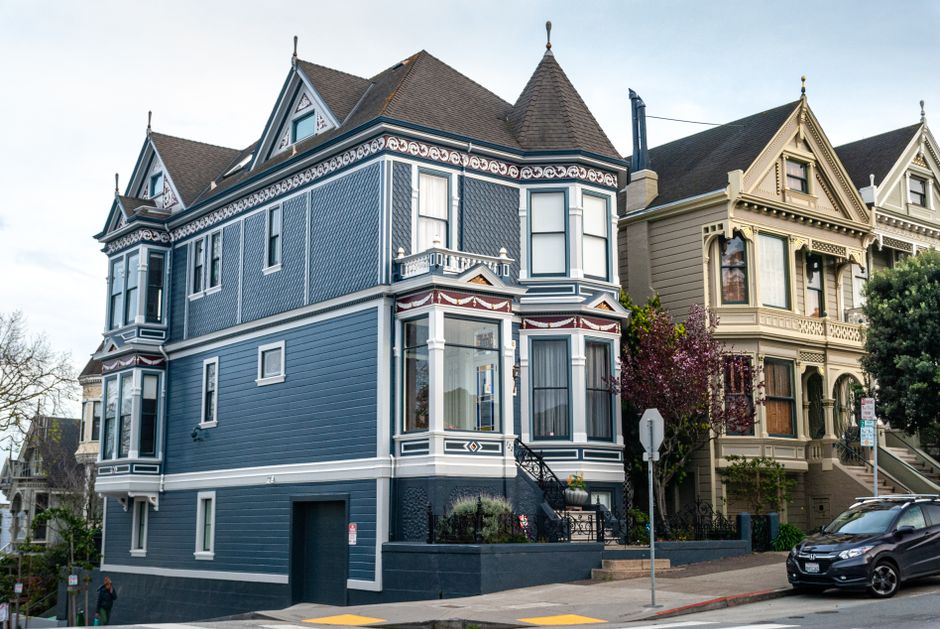
San Francisco's housing market entered the Fourth of July weekend with a jolt that had nothing to do with fireworks. All-cash offers are stacking up again on properties from Dogpatch lofts to Pacific Heights Victorians, and real estate agents across the city are reporting multiple-offer situations that evaporated during the slow years of 2023 and 2024. The median sale price has climbed to $1.3 million citywide, with premium corridors pushing well past $2 million for single-family homes.
The catalyst is a cocktail of returning tech-sector confidence and a recalibrated investor class that spent two years sitting on capital waiting for the Federal Reserve to blink. It blinked. With the 30-year fixed mortgage rate settling around 6.1 percent in late June — down from the 7.8 percent peak of late 2023 — yield-chasing money has pivoted back toward Bay Area real estate as a store of value. That's bad news for the nurse, the teacher, or the mid-level software engineer trying to close on their first home before school starts in September.
Where the Money Is Landing
The Mission District is seeing the sharpest re-entry pressure. Properties on 20th Street and Valencia Street corridors that sat for 45 or 60 days in early 2025 are now going under contract within a week, frequently above asking. The Dogpatch, long a favorite for smaller landlord-investors drawn to the neighborhood's live-work zoning and proximity to the Caltrain corridor at 22nd Street, has seen a 14 percent year-over-year uptick in investor-affiliated purchases through the first half of 2026, according to data tracked by the San Francisco Association of Realtors.
Pacific Heights and the Marina tell a different story — one of ultra-premium consolidation. Buyers affiliated with family offices and private equity vehicles have been particularly active on Broadway and Vallejo Street, snapping up multi-unit buildings that were quietly distressed after the remote-work exodus. The San Francisco Office of Economic and Workforce Development flagged the trend in a May briefing to the Board of Supervisors, noting that small-building acquisitions by entities with portfolios of ten or more units had risen sharply compared to the same period in 2024.
What It Means for Everyone Else
Individual buyers are getting squeezed on time and terms. Escalation clauses — nearly extinct in 2024 — have returned to roughly 30 percent of competitive offers logged by brokerages operating out of offices on Market Street and in the Financial District. Agents say buyers are waiving inspection contingencies again, a behavior that consumer advocates at the nonprofit Housing Rights Committee on Turk Street had hoped was permanently out of fashion after several high-profile buyer disputes in 2021 and 2022.
City programs designed to level the playing field are struggling to keep pace. The Mayor's Office of Housing and Community Development runs a downpayment assistance loan of up to $375,000 for qualifying first-time buyers under its Downpayment Assistance Loan Program, but the funding pool — roughly $10 million annually — gets exhausted within weeks of each replenishment cycle. Competition from cash-heavy investors makes those assisted buyers less attractive to sellers even when their financing is in order.
The practical read for buyers entering the market this summer: get pre-approved and then get pre-approved again with updated documentation, because sellers and their agents are scrutinizing financial strength more than at any point since 2022. Target properties that have been listed at least three weeks, where investor appetite may have already passed. Neighborhoods like Excelsior and Outer Sunset still offer below-median entry points — properties in those areas have been averaging closer to $950,000 to $1.1 million — and have not yet attracted the same institutional attention landing on central neighborhoods. That gap will close. Buyers who act before Labor Day will face less competition than those who wait for the fall market, when the investor pipeline, historically, refills after summer capital deployment reviews.