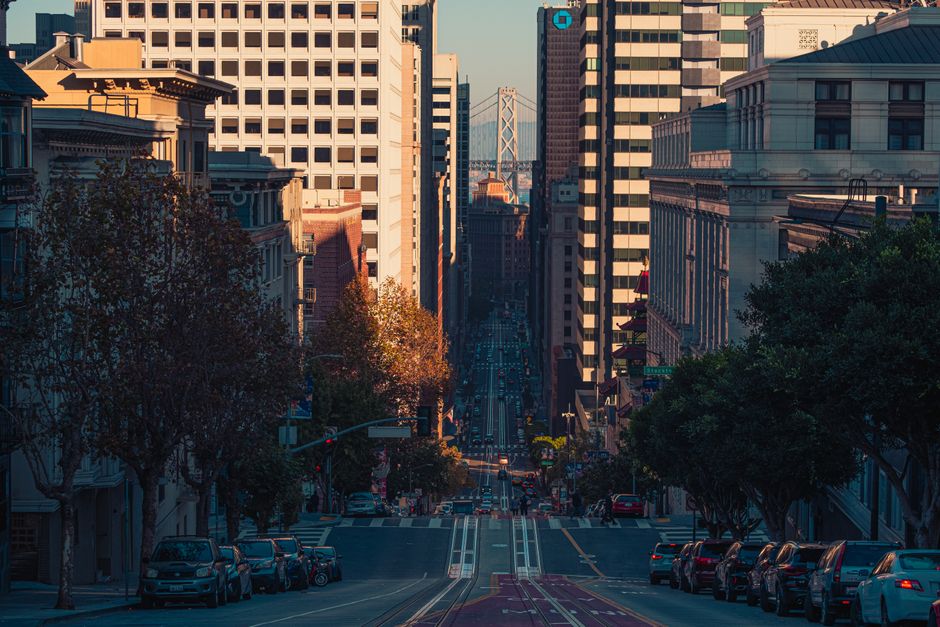
SF's 2026 Migration Surge Reshapes Housing, Jobs, and Communities
New data from city agencies and nonprofits paints a complex picture of San Francisco's shifting demographic landscape in 2026.
New data from city agencies and nonprofits paints a complex picture of San Francisco's shifting demographic landscape in 2026.
Listen to this article · 3:42
San Francisco's relationship with migration has always been mathematical—a calculus of available housing, job creation, and social services stretched across neighborhoods from the Mission to the Tenderloin. Fresh data from the city's Department of Homelessness and Supportive Housing, combined with census estimates and nonprofit surveys, now offers a granular view of how migration patterns are reshaping the city's fabric.
The numbers tell a story of pressure points. International arrivals to the Bay Area reached 127,000 in 2025, according to preliminary immigration service data, with approximately 34 percent settling initially in San Francisco proper. Of those, roughly 18 percent cited family reunification as their primary reason, while 42 percent came seeking employment. Yet the job market hasn't expanded proportionally: tech sector hiring in San Francisco declined 12 percent year-over-year, even as labor demand in hospitality and service industries climbed 8 percent.
Housing pressures underscore the disparity. The median rent for a one-bedroom apartment in the Mission District now exceeds $2,890 monthly—a 23 percent increase since 2023. In the Tenderloin, where many newly arrived migrants initially settle, nonprofit organizations report that 67 percent of their clients spend more than half their income on housing. The San Francisco Housing Authority's latest census identified 8,420 unsheltered individuals in July 2026, a 4 percent increase from the previous year, with foreign-born individuals comprising 31 percent of that total.
But integration metrics offer counterbalance. Data from the Mayor's Office of Community Investment shows that English language programs at venues like the San Francisco Public Library's Chinatown and Mission branches served 12,340 enrollees in the past year—a 19 percent uptick. Employment placement programs run by organizations across the city, from the Bayview to the Financial District, achieved a 67 percent job placement rate within six months for immigrant participants, compared to a 58 percent baseline for citywide programs.
Educational enrollment provides another lens. Public schools across San Francisco report 41 percent of students speak a language other than English at home, with 340 distinct languages represented. Meanwhile, community colleges report that 52 percent of new enrollments came from first-generation immigrant households.
The data suggests San Francisco remains fundamentally attractive to migrants seeking opportunity, even as systemic strains mount. The city's challenge, these numbers imply, lies not in whether newcomers arrive, but in whether existing infrastructure—housing, jobs, services—can absorb them equitably.
This article was compiled by AI and screened before publishing. See our editorial standards.
How does this story make you feel?
Spread the word
About this article
Published by The Daily San Francisco
Daily brief
Free, in your inbox before 7am. Weekdays.
More in News