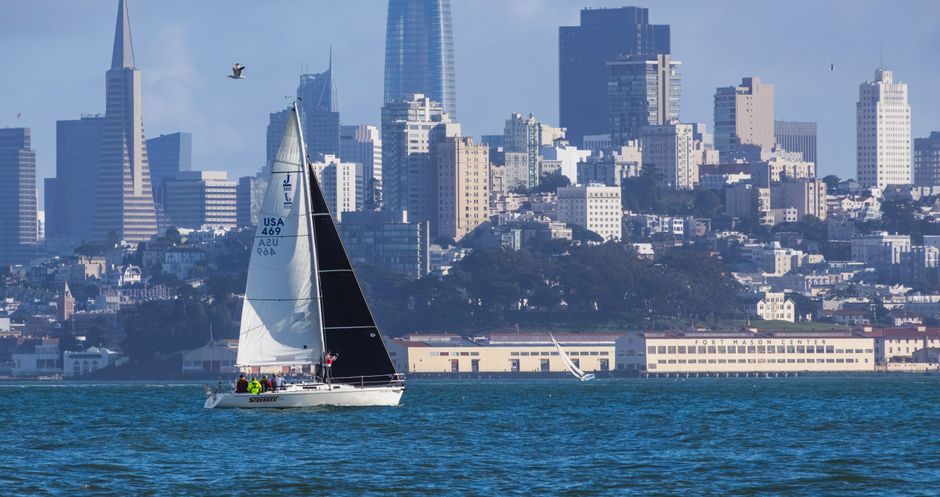
Walk down Market Street any weekday morning and you'll see the San Francisco startup scene in real time: crowded coffee shops in SoMa filled with engineers hunched over laptops, venture capitalists rushing between back-to-back pitches in South of Market office towers, and a palpable tension about what comes next in artificial intelligence.
The inflection point is here. After years of explosive growth fueled by generative AI hype, Bay Area startups are confronting a harder reality. Companies that raised north of $50 million on PowerPoint slides and API integrations are now burning through cash with limited revenue. Meanwhile, a handful of well-capitalized players—companies with enterprise contracts and proven unit economics—are hoovering up talent and market share.
The numbers tell the story. Salary expectations for AI engineers in San Francisco remain stratospheric: entry-level machine learning engineers command $180,000 to $220,000 annually, with experienced practitioners regularly seeing offers exceeding $400,000 when equity is included. Yet funding activity has cooled considerably. According to Crunchbase data, Bay Area AI startups raised approximately $3.2 billion in the first half of 2026, down nearly 40 percent from the same period last year.
Co-working spaces from Mission Bay to the Financial District are seeing a rotation. Shared desks that once housed 15-person AI startups now host smaller, more focused teams of five to eight people. Office subletting in SoMa and the Dogpatch—neighborhoods that became epicenters of the AI boom—is increasingly common as companies right-size operations.
But innovation hasn't stalled; it's shifted. Rather than general-purpose AI platforms, startups are now obsessed with vertical applications: AI for legal discovery, healthcare diagnostics, supply chain optimization. These founders—often visible at events hosted by Plug and Play or the San Francisco Startup Center—are taking longer to raise Series A, but they're raising with less dilution and more strategic intent.
The venture firms themselves are recalibrating. Sequoia, Andreessen Horowitz, and Benchmark—all headquartered in or closely tied to the Bay Area—are being far more selective about which AI pitches warrant checks. The era of betting on teams and ideas has given way to scrutiny of actual product adoption and revenue.
San Francisco's tech establishment is adjusting to a new reality: the AI goldrush may be entering its mature phase. For founders still grinding it out, that means one thing—execution, not hype, will determine winners.
This article was compiled by AI and screened before publishing. See our editorial standards.