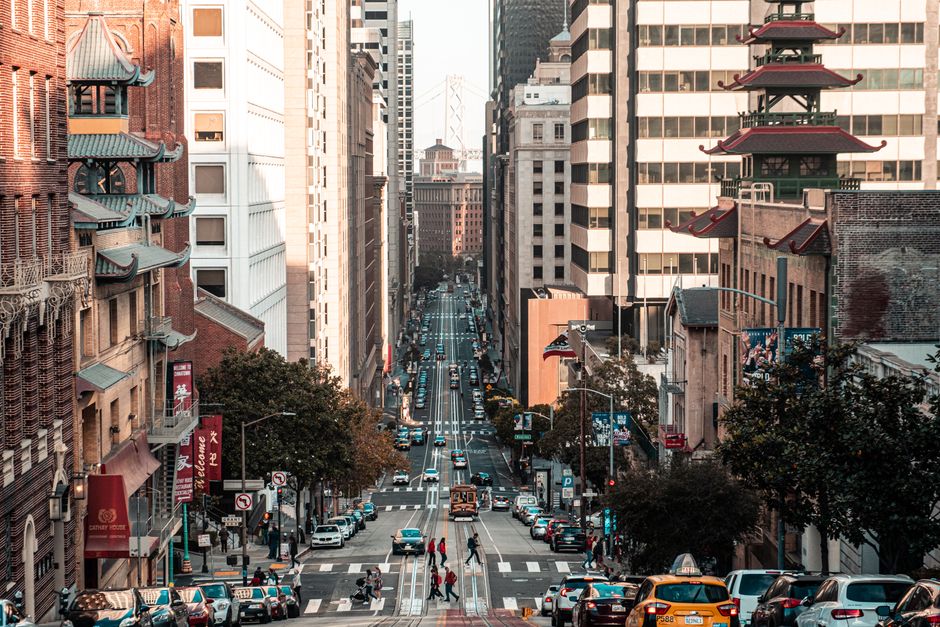
SF's Remote Work Boom Widens Inequality Gap
As companies embrace flexibility, worker surveillance and unequal access to opportunity reveal who truly wins in distributed work.
As companies embrace flexibility, worker surveillance and unequal access to opportunity reveal who truly wins in distributed work.
Listen to this article · 3:51
Walk down Folsom Street in SoMa on any Tuesday morning and you'll see the infrastructure of San Francisco's remote work boom: glass-fronted coworking spaces with names like Spark and WeWork stacked five stories high, each promising the digital nomad lifestyle at $400 to $800 per month. The vision is seductive—flexibility, community, escape from the traditional office. Yet beneath this entrepreneurial veneer lies a more troubling reality that San Francisco's tech establishment has been slow to confront.
The shift to remote and hybrid work has undeniably transformed how people work. Since 2024, San Francisco's office vacancy rates have hovered near 30 percent, according to commercial real estate data. That void was supposed to be filled by coworking operators and smaller companies seeking flexibility. Instead, what's emerged is a more fragmented, precarious labor market that has deepened inequality rather than democratized opportunity.
Consider the ethics of surveillance. Many coworking platforms now employ keystroke monitoring, activity tracking, and location verification systems ostensibly designed to protect intellectual property. Workers in these spaces—from freelancers in the Valencia Street corridor to startup employees using shared desks in the Financial District—are monitored far more closely than traditional office employees. There's limited regulation, murky terms of service, and little accountability when data breaches occur.
The promise of remote work was supposed to level the playing field between San Francisco and less expensive cities, allowing talent to distribute geographically. Instead, it's created a two-tiered system. Well-paid engineers and designers work from anywhere, their salaries unchanged. Lower-wage workers—receptionists, customer service staff, content moderators—are pushed into the gig economy, forced to share coworking spaces and bear the costs themselves. The economic benefit flows upward, not outward.
There's also the question of urban decay. San Francisco's downtown corridor, from the Tenderloin through to the Embarcadero, has been hollowed out by remote work adoption. Small businesses that relied on foot traffic have closed. Public transit revenue has declined. The city's tax base has contracted. Meanwhile, coworking operators pay substantially lower rent per square foot than traditional office tenants, shifting the burden to property owners and municipal services.
The ethical conversation San Francisco needs to have isn't about whether remote work is good or bad—it clearly offers genuine benefits. It's about who bears the costs, who captures the gains, and what responsibilities coworking platforms and employers have to the workers and communities that enabled this shift. Without intervention, the remote work revolution risks becoming another mechanism by which San Francisco's wealth concentrates among those already privileged enough to navigate it.
This article was compiled by AI and screened before publishing. See our editorial standards.
How does this story make you feel?
Spread the word
About this article
Published by The Daily San Francisco
Daily brief
Free, in your inbox before 7am. Weekdays.
More in tech