San Francisco's AI Boom Defies Silicon Valley's Old Cycles
Legacy institutions and patient capital reshape SF's tech future as competitors worldwide watch how the city adapts to artificial intelligence.
Legacy institutions and patient capital reshape SF's tech future as competitors worldwide watch how the city adapts to artificial intelligence.
Listen to this article · 4:00
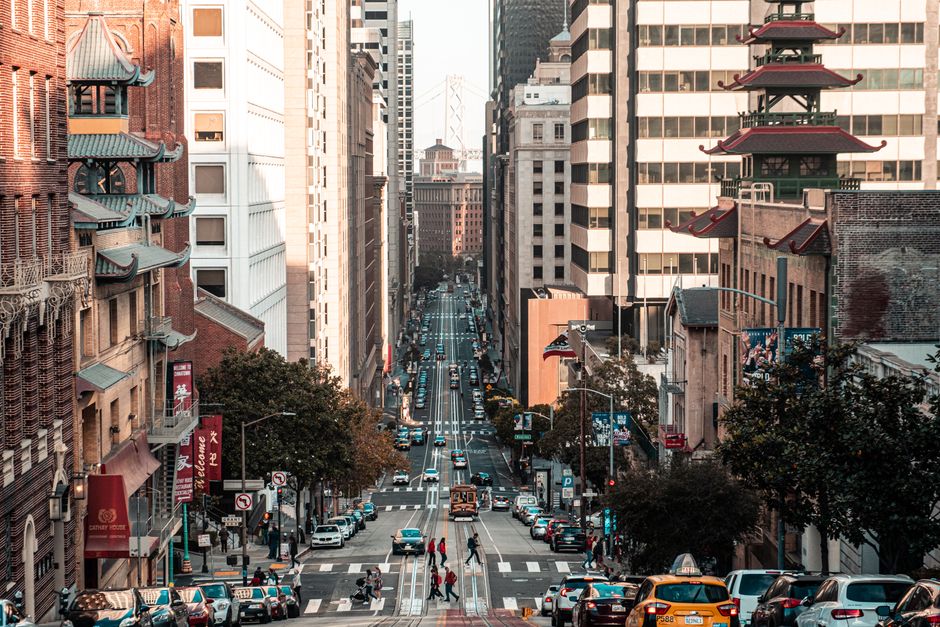
Walk down Market Street on any given afternoon and you'll see the paradox that defines San Francisco's artificial intelligence moment: venture capital firms occupying historic buildings designed for newspaper printing presses, while across the Bay Bridge, newer tech hubs struggle to replicate what this city has almost accidentally built.
Unlike previous tech booms that rewarded first-mover advantage and rapid scaling, San Francisco's AI ecosystem thrives on something more durable—institutional depth. The University of California's AI research labs in Berkeley and UCSF's computational biology programs create a pipeline of PhD-level talent that venture firms on Sandhill Road simply cannot access elsewhere at scale. That proximity matters enormously when training a frontier AI model requires researchers willing to commute 45 minutes rather than relocate to Austin or Denver.
The numbers reflect this distinction. Real estate in SOMA currently commands $85-$95 per square foot annually for office space—among the highest globally—yet major AI startups continue expanding here rather than decamping to cheaper alternatives. Why? The concentration of technical expertise, cloud infrastructure partners headquartered nearby, and a client base of established enterprises still willing to experiment with unproven AI tools creates network effects that transcend real estate economics.
Consider the difference from earlier cycles. The 2010s mobile boom rewarded whoever could hire the fastest and move the quickest. San Francisco had advantages, but so did Seattle, Los Angeles, and Vancouver. Artificial intelligence, however, remains intellectually complex enough that it hasn't yet commoditized into pure engineering execution. The city's distinctive advantage lies in its ability to anchor abstract research to practical business problems—something the Bay Area's venture ecosystem has been quietly perfecting for three decades.
Major enterprise clients—financial institutions along the Montgomery Street corridor, healthcare systems across the Bay, logistics companies in the Peninsula—have spent eighteen months deploying AI tools developed by companies with offices in the Mission District or Potrero Hill. They've done so with patience that reflects San Francisco's maturity as a tech market. Elsewhere, AI adoption follows hype cycles. Here, it follows scar tissue from previous booms: executives remember the dot-com collapse, the 2008 financial crisis, the crypto winter. They implement carefully.
This doesn't mean San Francisco has solved the challenge of maintaining its tech advantage. Rising operational costs, regulatory scrutiny, and competing AI ecosystems in New York and London pose genuine threats. But for now, the city's combination of concentrated talent, patient capital, and battle-tested business judgment creates something globally distinctive: an AI ecosystem built on depth rather than speed, and on sustained competitive advantage rather than temporary hype.
This article was compiled by AI and screened before publishing. See our editorial standards.
How does this story make you feel?
Spread the word
About this article
Published by The Daily San Francisco
Daily brief
Free, in your inbox before 7am. Weekdays.
More in tech