First-Time Buyers Face Yield Reality: What San Francisco's Investment Numbers Actually Show
As grants dry up and finance tightens, new data reveals how owner-occupier returns stack up against investor expectations in today's market.
As grants dry up and finance tightens, new data reveals how owner-occupier returns stack up against investor expectations in today's market.
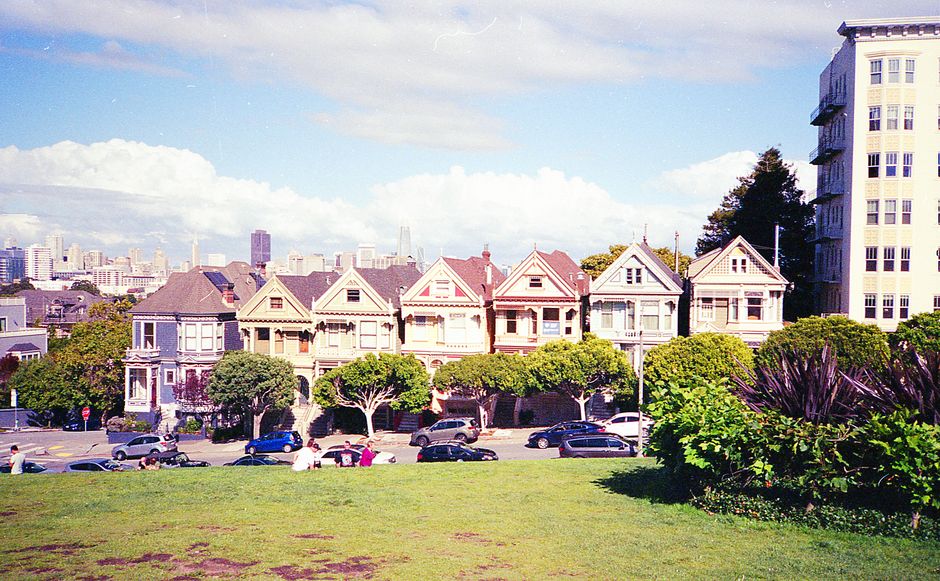
San Francisco's first-time buyer market has entered a sobering phase. While median prices hover around $1.3 million across the city, a closer look at yield data reveals why investor enthusiasm for owner-occupied properties has cooled considerably since early 2025.
The numbers tell a stark story. Properties in Mission District—traditionally the entry point for younger buyers—now command rental yields of 2.8 to 3.2 percent annually, down from 3.8 percent two years ago. A modest two-bedroom on Valencia Street valued at $950,000 generates roughly $28,000 in annual rent, leaving little room for capital appreciation betting when mortgage rates remain elevated at 6.5 percent-plus.
Compare this to Dogpatch, where comparable properties now yield 3.1 percent. Buying power has effectively contracted. A first-time buyer with a $300,000 down payment—increasingly rare in San Francisco—faces $1 million-plus in financing costs over thirty years. The math simply doesn't favour speculation.
Grant programs remain critical. The First-Time Homebuyer Program through the San Francisco Housing Finance Committee still offers down payment assistance up to $250,000 in some cases, though eligibility has tightened. Median household income caps now sit at 120 percent of area median income, excluding most tech workers from assistance.
Banks have also recalibrated. Debt-to-income ratios have tightened to 43-45 percent maximum, meaning a $1.3 million property requires household income exceeding $425,000 annually—virtually unattainable for non-tech professionals.
Data from recent Pacific Heights sales illustrate this disconnect. A four-bedroom Victorian recently listed at $3.2 million attracted primarily cash buyers and institutional investors, not owner-occupiers. The yield play—renting out while equity builds—only works if you can afford the entry price. For most buyers, it no longer does.
The irony is sharp: grant programs exist, but the gap between assistance caps and actual purchase prices has widened faster than any policy adjustment. A buyer in the Tenderloin—often the lowest price point—still requires $600,000-plus in capital for a modest one-bedroom.
Industry observers suggest the real opportunity now lies in looking beyond traditional premium neighbourhoods. Areas along the Embarcadero and Bayview are seeing modest yield improvements as prices stabilize, though buyer demand remains cautious.
For first-time buyers, the lesson is clear: focus on owner-occupancy value, not investor returns. The numbers simply won't support both in today's San Francisco.
This article was compiled by AI from the sources linked above and screened before publishing. See our editorial standards.
How does this story make you feel?
Spread the word
About this article
Published by The Daily San Francisco
Daily brief
Free, in your inbox before 7am. Weekdays.
More in Property