SF City Hall's Duplicate Image Problem: What Officials and Experts Are Saying
A growing backlog of duplicated photographs in municipal databases is slowing permit approvals and costing taxpayers money — and city insiders want action now.
A growing backlog of duplicated photographs in municipal databases is slowing permit approvals and costing taxpayers money — and city insiders want action now.
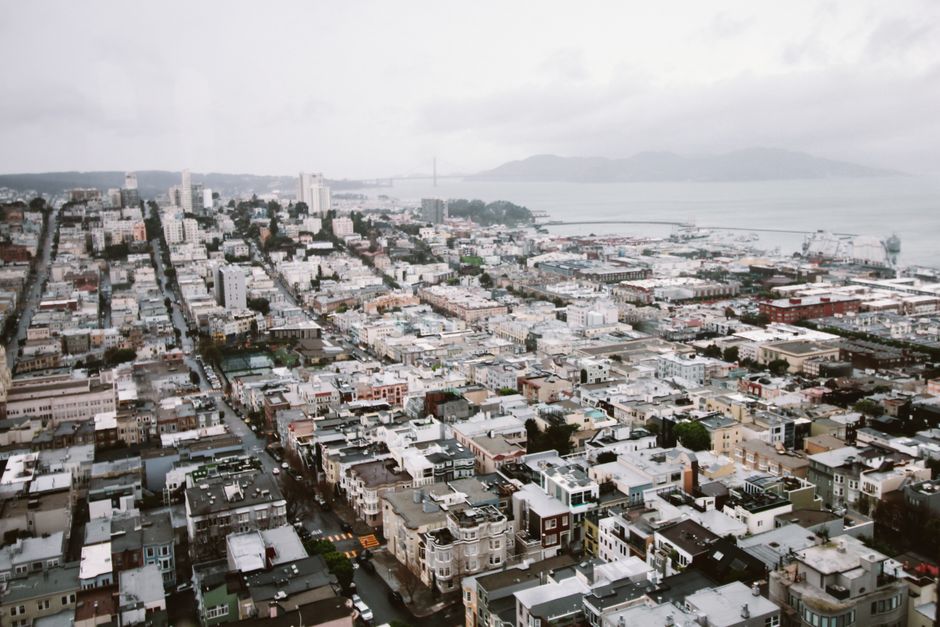
San Francisco's Department of Building Inspection is sitting on a digital records mess that inspectors, architects, and city technology officers have flagged for more than two years: tens of thousands of duplicate photographs clogging permit-application databases, causing processing delays and inflating storage costs that city budget documents peg at more than $400,000 annually for cloud infrastructure alone.
The problem, while unglamorous, has real consequences on the ground. Contractors filing renovation permits in neighborhoods like the Mission District and SoMa say the same site photographs appear multiple times in the city's online portal, forcing staff reviewers to manually sift through redundant files before approvals can move forward. With San Francisco's housing production emergency still in full force — the city's Housing Element targets 82,000 new units by 2031 under state law — any drag on permit throughput draws immediate scrutiny from planners and elected officials alike.
The issue gained new urgency this spring after the city's Office of Digital Services, based at 1 Dr. Carlton B. Goodlett Place, published an internal audit of legacy data systems across eight departments. That review, completed in April 2026, identified image deduplication as one of three high-priority fixes needed before the city can migrate its permitting infrastructure to a unified platform scheduled to launch in early 2027.
Technology officers working within the Department of Technology on Seventh Street have described the problem in public budget hearings as a downstream consequence of the pandemic-era rush to digitize paper records. Between 2020 and 2022, city vendors uploaded roughly 1.2 million scanned documents into the Accela permitting system — a widely used platform across California municipalities — with limited quality controls. Duplicate images were baked in from day one.
Experts outside City Hall are not particularly surprised. Urban data specialists who have consulted with the San Francisco Planning Department point out that duplicate-image problems are common whenever organizations digitize in bulk without automated hash-checking — a basic technique that flags identical files before they are stored. The fix is technically straightforward but requires dedicated staffing and a budget line, both of which have competed for priority against higher-profile crises including the fentanyl response on Tenderloin streets and the BART maintenance backlog.
The Office of Digital Services has proposed a three-phase remediation plan. Phase one, budgeted at roughly $180,000, would deploy open-source deduplication software across the Building Inspection and Planning Department image libraries by October 2026. Phase two would introduce automated checks on all new uploads. Phase three would establish a citywide image governance standard applicable to all departments by mid-2027.
Whether that timeline holds depends on the Mayor's Office of Housing and Community Development and the Board of Supervisors agreeing on a supplemental appropriation in the fall budget cycle. District 6 Supervisor records show the item has been flagged for the Government Audit and Oversight Committee, though no hearing date has been set as of July 4, 2026.
Architects who regularly file with the city — firms concentrated along Market Street and in the Financial District — have circulated a letter through the San Francisco chapter of the American Institute of Architects urging the city to fast-track the deduplication work. Their argument is straightforward: every redundant image a reviewer must click past adds time, and time in San Francisco's permitting system translates directly into project cost. Industry estimates suggest the average residential permit review already runs 40 to 60 days longer in San Francisco than in comparable California cities.
The practical advice from city technology staff to anyone filing permits right now: label image files with unique, descriptive filenames before upload, and avoid re-submitting photographs already on record. The Accela portal does not yet warn users when a duplicate is detected, so the burden falls entirely on the applicant. That workaround costs nothing but attention — and for a problem this fixable, city officials say they are out of excuses to wait another budget cycle to solve it properly.
How does this story make you feel?
Spread the word
About this article
Published by The Daily San Francisco
Daily brief
Free, in your inbox before 7am. Weekdays.
More in News