SF Officials Unveil Sector-by-Sector Roadmap to Carbon Neutrality by 2050
City Hall released specific decarbonization strategies this week covering buildings, transit, and the port, with price tags attached.
City Hall released specific decarbonization strategies this week covering buildings, transit, and the port, with price tags attached.
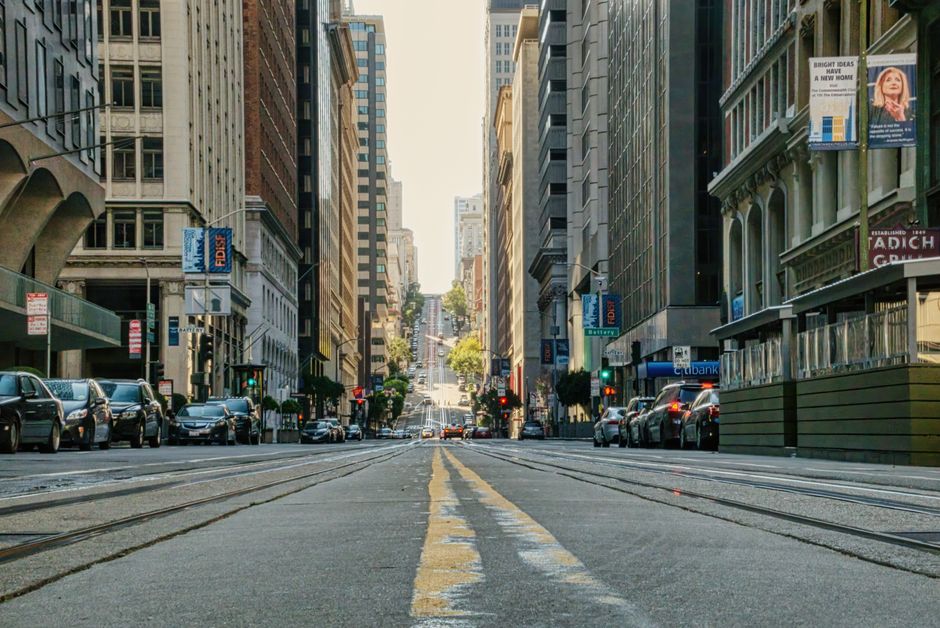
San Francisco's Department of the Environment dropped the most detailed version yet of the city's carbon neutrality plan Thursday, laying out a sector-by-sector blueprint that assigns dollar figures, timelines, and responsible agencies to each major source of greenhouse gas emissions. The release marks the first time the city has publicly committed to specific measurable milestones under the 2050 neutrality target rather than broad aspirational language.
The timing is deliberate. Europe is reeling from a summer heatwave that killed more than 2,000 people in France alone at its peak, and climate policy has rarely carried more political urgency. Back home, San Francisco is trying to shore up its progressive bona fides after years of headlines dominated by fentanyl deaths, school closures, and the slow grind of the homelessness response. Mayor Daniel Lurie, who took office in January, has been under pressure to show that the city can deliver concrete results on the issues voters say they still care about beyond public safety.
Buildings account for roughly 44 percent of San Francisco's greenhouse gas emissions, according to figures the Environment Department cited in Thursday's briefing at City Hall's Room 400. The new roadmap sets 2035 as the hard deadline for eliminating natural gas in all new commercial construction, and 2040 for mandatory electrification retrofits in existing buildings above 50,000 square feet. Property owners who miss the retrofit deadline face fines starting at $10,000 per year under a proposed ordinance the Board of Supervisors is expected to vote on before September.
The Port of San Francisco gets its own chapter. The document calls for zero-emission shore power at all berths along the Embarcadero by 2035, at an estimated cost of $340 million, roughly two-thirds of which the city is seeking through federal infrastructure grants and state cap-and-trade funds. Pier 70 in Dogpatch, currently being redeveloped by Brookfield Properties, is named as the pilot site for the electrification program, with the first fully powered berth targeted for 2028.
On transit, the plan leans heavily on the Muni electrification program already underway. The city says its bus fleet will be 100 percent electric by 2031, five years ahead of the state mandate. BART coordination is trickier — the agency operates under a separate board — but the roadmap calls for a new joint working group by the end of 2026 to align station-area land use with transit capacity, specifically flagging the 16th Street Mission BART station and the Caltrain depot at 4th and King as priority nodes for transit-oriented density.
The life sciences sector, which has expanded aggressively into Mission Bay and the adjacent Dog Patch corridor over the past five years, presents a specific challenge. Research facilities run energy loads several times higher per square foot than standard office buildings, and the plan acknowledges that the city cannot simply mandate electrification without risking the relocation of anchor tenants like UCSF Health and the Buck Institute's Mission Bay satellite operations. Instead, officials are proposing a voluntary Green Lab Certification program, modeled loosely on the My Green Lab standard used in Boston and Seattle, with property tax incentives worth up to $2.50 per square foot annually for participating institutions.
The Sunset District and the Excelsior, two neighborhoods with high concentrations of older single-family homes and small multifamily buildings, are earmarked for a new Home Electrification Loan Fund. The fund, seeded with $80 million from the city's Clean Energy Dividend — a rebate mechanism tied to CleanPowerSF revenues — would offer zero-interest loans to homeowners earning below 120 percent of the area median income, currently $145,000 for a family of four in San Francisco.
Public comment on the full plan runs through August 15, with hearings scheduled at the Bayview Opera House on July 22 and at the Tenderloin's Civic Center Hotel community room on July 29. The Board of Supervisors' Land Use Committee is expected to take up the buildings ordinance in early September, and the Environment Department says a revised plan incorporating public feedback will go to the full Board before the end of the year.
How does this story make you feel?
Spread the word
About this article
Published by The Daily San Francisco
Daily brief
Free, in your inbox before 7am. Weekdays.
More in News


