news
San Francisco's Mission District Garden Expands Amid $4,200 Rents
A decades-old community garden on 26th Street is expanding its plots even as the neighborhood around it prices out the families who built it.
How we reported this
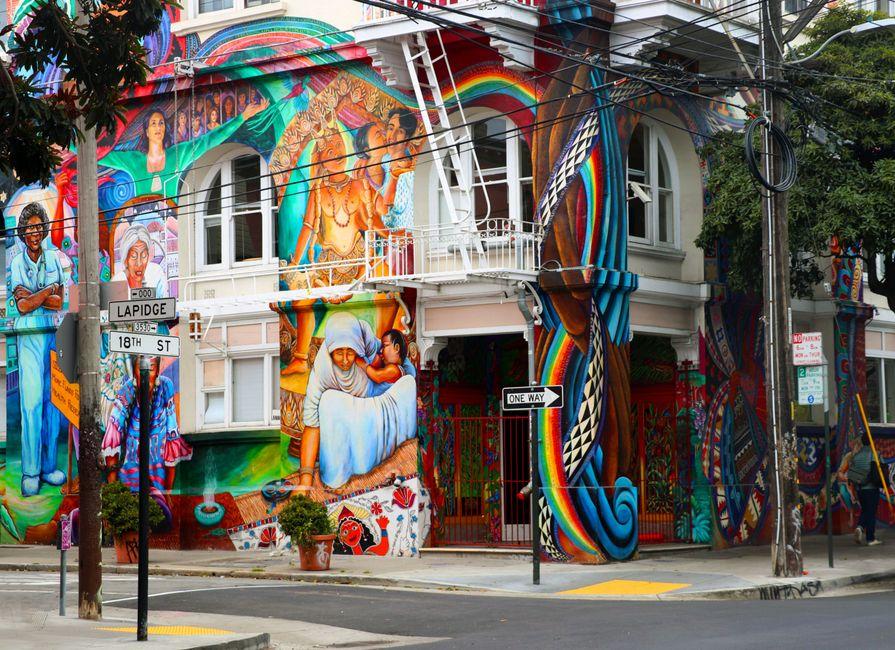
La Lengua Community Garden on 26th Street added 14 new growing plots this spring, pushing its total to 62, the largest single expansion since the garden was established in 2009. The timing is pointed. Median one-bedroom rents in the Mission District hit $4,218 in June, according to Zumper's monthly index, the highest the neighborhood has recorded since before the pandemic emptied its restaurants and muraled corridors. The garden is growing. So is the pressure on everyone tending it.
The collision is not accidental. City-funded green space in working-class neighborhoods has become one of the sharper fault lines in San Francisco's ongoing housing emergency. When rents rise, community anchors like gardens become simultaneously more precious and more threatened, beloved enough to protect on paper, but unable by themselves to hold a ZIP code together. San Francisco's approach to that tension is being watched, and sometimes copied, by planners in Berlin, Amsterdam, and Mexico City, all of whom are wrestling with how much a raised bed of chard can really do for a neighborhood under siege from capital.
What San Francisco Is Actually Doing
The Recreation and Parks Department administers 38 community gardens across the city through its Garden for the Environment program, which has a 2026 operating budget of $1.4 million. The Mission's gardens, La Lengua, the Parque de los Niños on Treat Avenue, and the smaller plots maintained by the Precita Eyes Mural Arts Association near Cesar Chavez Street, receive a portion of that funding, supplemented by grants from the San Francisco Community Land Trust, which is simultaneously trying to acquire rental properties before they flip to market rate.
The land trust model is the part other cities are studying hardest. Berlin's Mietshäuser Syndikat, a cooperative housing network, operates on a similar principle, permanently de-commodifying property by locking it out of the speculative market. Amsterdam expanded its community land trust portfolio by 400 units in 2024 under a municipal program tied to its Volkstuinen, or people's gardens, network. Mexico City's Huertos Urbanos initiative, launched in 2023 under the Sheinbaum administration, links urban agriculture plots to rent-stabilized housing within a 500-meter radius of each site. San Francisco has no such formal linkage. The gardens and the housing crisis operate in adjacent bureaucratic silos.
That gap frustrates housing advocates at the Mission Economic Development Agency, or MEDA, which has spent the past three years trying to build what its staff describe as an integrated anti-displacement toolkit, combining commercial corridor stabilization, homeownership programs, and green space stewardship into a single neighborhood strategy. MEDA has acquired 1,600 units of permanently affordable housing in the Mission since 2001, but organizers say the pace of acquisition has not kept up with the pace of displacement. Between 2020 and 2025, the Mission's Latino population fell by an estimated 8 percent, according to city planning department demographic estimates.
The Comparison That Stings
Amsterdam offers the most direct rebuke. The Dutch capital formally requires any developer seeking a variance on green space conversion to fund an equivalent community agriculture replacement within the same district. San Francisco has no such requirement. A developer can, and regularly does, replace a vacant lot used informally for growing food with a market-rate building and owe the neighborhood nothing beyond standard impact fees.
That policy gap is now getting political attention. Supervisor Hillary Ronen, whose District 9 covers much of the Mission, has been circulating a draft ordinance that would establish a Community Green Space Preservation Fund, seeded with 0.5 percent of proceeds from any land sale over $5 million in designated displacement-risk neighborhoods. If passed, it would be the first law in the United States to formally tie real estate transaction revenue to community garden preservation.
The ordinance has no hearing date yet, and the Mayor's budget office has not endorsed it. What happens next depends partly on whether garden advocates can hold the coalition together through what promises to be a fractious fall budget season. In the meantime, the 62 plots on 26th Street are fully subscribed, with a waitlist of 34 households. Most of them are still in the Mission. For now.