Haight Ashbury Uncovered: The People Making History in San Francisco's Most Storied Neighborhood
From vintage shop owners to longtime residents, we spoke with the faces keeping Haight Ashbury alive—and what it costs to be part of this iconic scene.
From vintage shop owners to longtime residents, we spoke with the faces keeping Haight Ashbury alive—and what it costs to be part of this iconic scene.
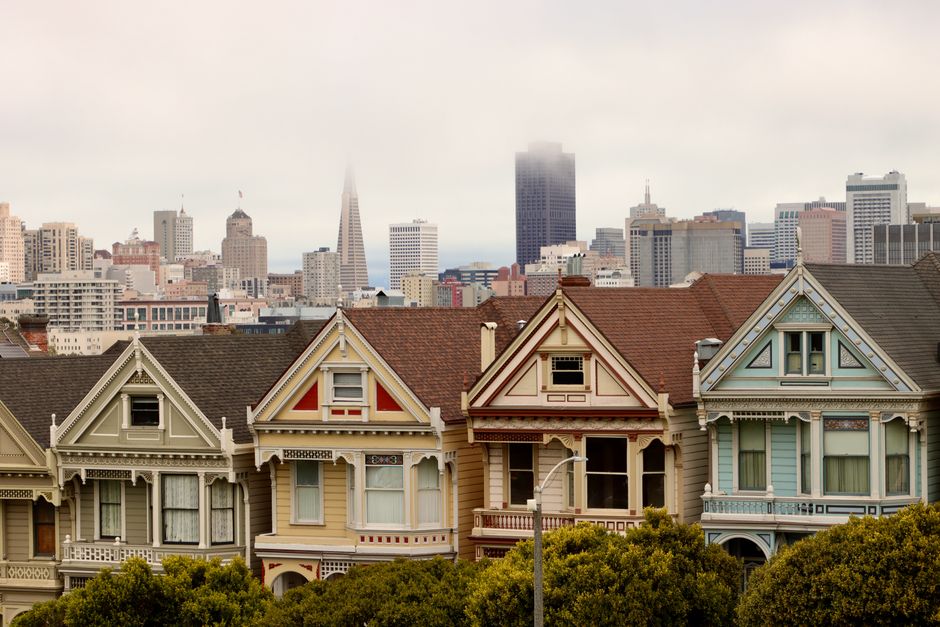
The Haight works on legend. Walk down Haight Street on a Saturday afternoon and you'll see tourists snapping selfies outside the Grateful Dead house at 710. Tour buses idle near the corner of Haight and Ashbury. Head shops sell tie-dye by the armload. But behind the postcards and the mythology are real people running real businesses in one of San Francisco's most expensive neighborhoods, and many are struggling to stay.
This matters now because Haight Ashbury is at an inflection point. Commercial rents on Haight Street have climbed to $4,500 to $6,200 per month for a modest storefront, according to recent commercial real estate surveys. Residential units in the surrounding blocks average $3,200 to $4,800 monthly for a one-bedroom. The neighborhood that once represented countercultural resistance has become a luxury destination, and the people who made it special are getting priced out.
Walk into Amoeba Music at 1855 Haight Street and you're stepping into an institution. The independent record store moved here in 1997 and has become an anchor—a place where musicians, collectors, and curious visitors converge over vinyl and CDs in a neighborhood where most storefronts turn over every few years. Staff there will tell you that overhead keeps climbing. Rents across the commercial corridor have jumped 40 percent over the past five years, according to data from San Francisco's Planning Department.
A few blocks over, the Haight Ashbury Free Clinic, founded in 1967 and still operating from its original location, serves uninsured and low-income patients in the district. The clinic sees roughly 200 patients weekly, many of them longtime residents who can no longer afford market-rate care elsewhere. The organization runs on donations and grants, competing for resources as the neighborhood's demographics shift toward younger, wealthier residents.
The math is brutal for anyone trying to run a business here. A modest coffee shop or used bookstore needs to generate $8,000 to $12,000 in weekly revenue just to cover rent, utilities, and payroll. That's a threshold most independent operators can't sustain in a neighborhood where foot traffic is heavily seasonal and tourist-dependent.
The people with roots here—the ones who worked retail or hospitality in the 1990s and early 2000s—have mostly moved east to the Outer Sunset or out to neighborhoods like the Richmond, where a one-bedroom rents for $2,400 to $3,100. Some moved to other Bay Area cities. Others simply left the region.
Current residents describe a strange disconnect. The neighborhood markets itself on its bohemian past—the Summer of Love, the music scene, the political activism—but the economics work against that lifestyle now. A vintage clothing store owner who's held their lease for 12 years acknowledged that when their contract comes up for renewal next year, the landlord will likely ask for double the current rate. They're already looking at locations in the Outer Mission.
What draws visitors—proximity to Golden Gate Park, the location's cultural history, the density of cafes and music venues—is exactly what's pushed out the people who built that reputation. The Fillmore, once the heart of San Francisco's Black music scene, underwent similar transformation decades ago. The Haight is experiencing its own version of that displacement, just at a different pace.
If you're planning to spend time here, go with realistic expectations. Budget $25 to $35 for a meal, $8 to $12 for coffee, $15 to $45 for a vintage record or book, depending on what you're hunting. Visit the Free Clinic's website to learn about its history—it's worth understanding who's actually serving the community beyond the souvenir shops. Stop by Amoeba on a weekday if you want actual conversation with staff instead of navigating crowds. And if you meet someone who works here, ask them how long they've been around. Those stories are getting rarer.
How does this story make you feel?
Spread the word
About this article
Published by The Daily San Francisco
Daily brief
Free, in your inbox before 7am. Weekdays.
More in lifestyle