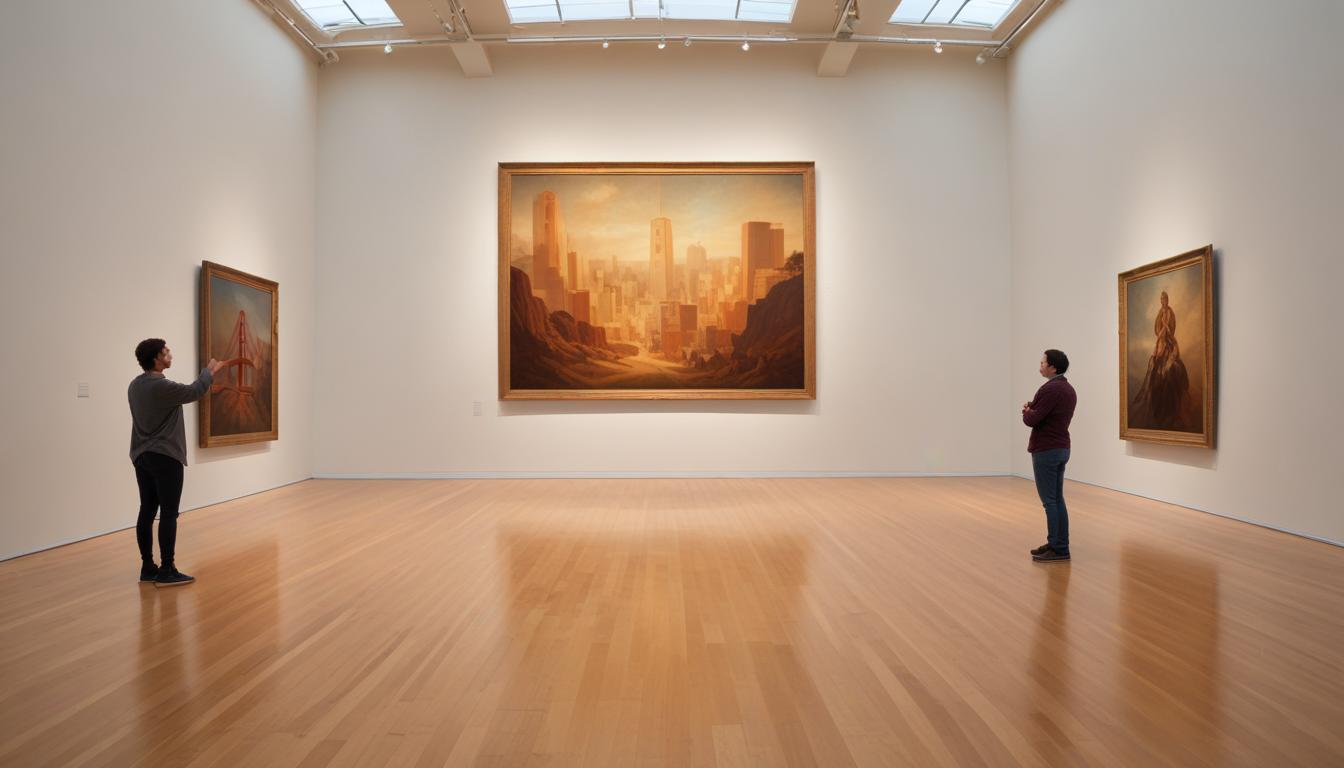
Five years ago, the alley behind Valencia Street between 24th and 25th was a patchwork of tags and weathered murals. Today, it's a carefully curated outdoor gallery managed by the Clarion Alley Mural Project, which has evolved from a scrappy collective into a cultural institution that hosts quarterly community paint days and international artist residencies.
This transformation—replicated across a half-dozen neighborhoods—reflects a seismic shift in how San Francisco's street art ecosystem operates. Rather than city planners or real estate developers controlling the narrative, artist-led nonprofits and community collectives have seized creative authority, turning raw neighborhoods into globally branded creative districts while maintaining grassroots governance structures.
"The difference now is intention," says the Mission Local Arts Corridor, a network of artist collectives that emerged in 2019 to coordinate projects across the Mission District. The organization has documented over 400 active murals in a twelve-block radius, generated an estimated $2.3 million in cultural tourism annually, and kept average mural project costs at $8,000—well below the city's historical average of $40,000 for commissioned public art.
SOMA's emerging Creative District Council, formalized just eighteen months ago, represents an even more striking example of community-led institutionalization. What began as informal Friday-night gallery walks and warehouse studio clusters has crystallized into a membership organization with over 200 participating artists and 40 businesses. They've secured $750,000 in city funding through a competitive grant program specifically designed to support artist-directed neighborhood development.
The movement has teeth because it operates with radical transparency. Decision-making happens in public meetings held at nonprofits like The Beat Museum and The San Francisco Arts Commission. Wall selections are vetted by community vote. Revenue from licensing street art imagery goes directly into artist equity funds rather than corporate coffers.
But success breeds complications. As property values around newly branded creative districts have surged—Mission District rents climbed 18 percent between 2023 and 2025—organizers face the painful irony of their own gentrification. The Clarion Alley Project and Mission Local Arts Corridor have both launched anti-displacement initiatives, including artist housing funds and lease-protection advocacy.
"We didn't fight to get control of our public space just to watch artists get priced out," one Mission-based artist collective coordinator noted during a June community forum. It's the central tension of this cultural moment: how to scale a movement while protecting the precarious communities that birthed it.
This article was compiled by AI from the sources linked above and screened before publishing. See our editorial standards.